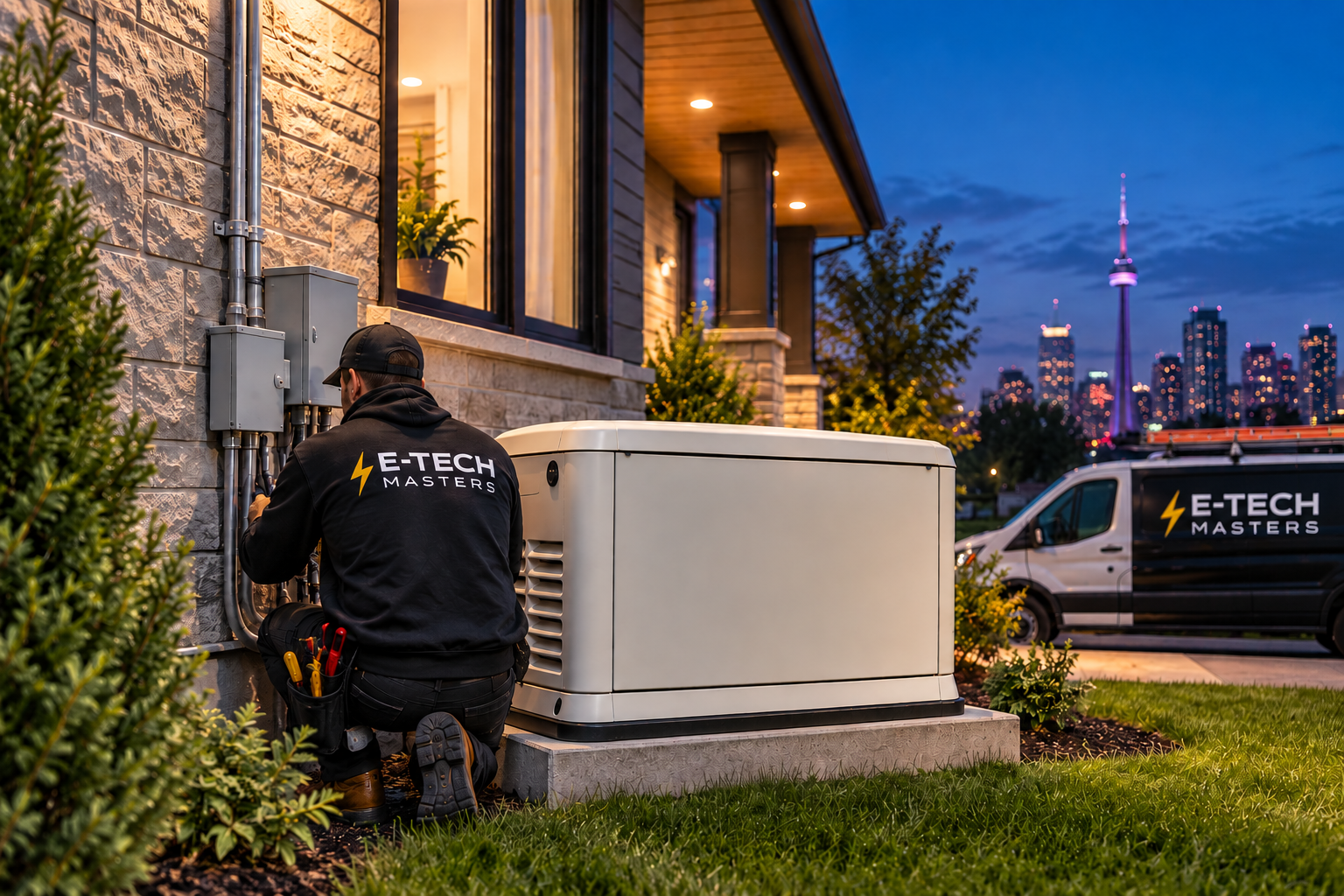
A power outage rarely comes at a convenient time. When the grid goes down, a home can lose heat, lighting, refrigeration, the sump pump and the Wi-Fi a family relies on to work and stay in touch. A properly planned backup generator keeps the systems that matter most running until utility power returns.
This guide explains how a home backup generator works, what goes into planning an installation, and what to consider before you commit to a system. It is written for homeowners in Toronto and across the Greater Toronto Area who want to understand the process before speaking with an electrician. It is not a do-it-yourself guide: connecting a generator to a home’s electrical system is work for a licensed electrical contractor.
Why Install a Backup Generator in the GTA?
Most outages are short, but some last long enough to cause real problems. Winter storms, ice, high winds and summer heat can all put stress on the electrical grid, and when an outage stretches from minutes into hours, the effects add up.
A backup generator helps you keep essential household systems running, such as:
- Heating – many furnaces and boilers need electricity for their controls, igniters and blowers, even when they burn natural gas.
- Sump pumps – losing a sump pump during heavy rain or a spring thaw can lead to basement flooding.
- Refrigerators and freezers – keeping food cold avoids waste and the cost of replacing it.
- Lighting and outlets – basic lighting, phone charging and internet equipment make an outage far more manageable.
- Home offices – for people who work from home, keeping a computer and internet connection running can matter a great deal.
- Medical or accessibility equipment – some households depend on powered equipment and need a reliable backup plan.
The right system depends on your household. Some homeowners only want the essentials covered, while others want most of the home to keep running as normal.
How Does a Home Backup Generator Work?
A home backup generator produces electricity from a fuel source and delivers it to your home’s electrical system when utility power is unavailable. The key to doing this safely is the transfer switch.
Here is the basic process:
- Utility power fails. Your home loses power from the grid.
- The generator starts. A permanently installed standby generator can start automatically. A portable generator is started manually.
- The transfer switch changes the power source. The transfer switch disconnects your home from the utility supply and connects it to the generator. With an automatic transfer switch, this happens without anyone needing to act.
- Selected circuits receive power. Depending on how the system is designed, the generator supplies either chosen essential circuits or a larger part of the home.
- Utility power returns. The transfer switch moves the home back to utility power, and the generator shuts down.
The transfer switch is a critical safety component. It keeps generator power from flowing back into utility lines, a hazard known as backfeeding, which can endanger utility workers and neighbours. It also protects the generator and your home’s wiring. Plugging a generator into a household outlet, or connecting it to the panel without a proper transfer device, is unsafe and should never be done.
How to Plan a Backup Generator Installation
A good installation starts with planning. The steps below explain what happens and why each decision matters. The electrical work itself should always be carried out by a licensed electrical contractor.
1. Decide Which Systems Need Backup Power
Start by listing what you want to keep running during an outage. Common priorities include the furnace or boiler, sump pump, refrigerator, freezer, well pump (for rural properties), a few lighting circuits, internet equipment and a home office. Some homeowners also want air conditioning, a kitchen range or other larger appliances covered.
This list shapes every other decision, from generator capacity to how the system is connected to your panel. Think about both comfort and risk: which systems would be an inconvenience to lose, and which could lead to damage or safety problems?
2. Determine the Appropriate Generator Capacity
There is no single “right size” for every home. The generator needs to handle the electrical loads you want to support, including the extra power some equipment draws for a moment when it starts, such as pumps, compressors and motors.
An electrician can assess your home’s existing electrical service, the circuits you want to back up and how those loads are likely to run at the same time. An undersized generator may struggle or shut down under load, while an oversized one can cost more than necessary. Sizing should be worked out for your specific property rather than chosen from a general rule of thumb.
3. Choose a Suitable Installation Location
A permanently installed generator is placed outdoors, usually on a stable, level base. The location needs to account for:
- Safe clearances from windows, doors, vents and air intakes, so exhaust cannot enter the home
- The manufacturer’s installation and clearance requirements
- Access for maintenance and servicing
- Drainage, snow and seasonal conditions
- The distance to your electrical panel and fuel supply
- Noise and consideration for neighbours
- Any rules that may apply to your property or municipality
Portable generators should never be run inside a home, garage, basement or other enclosed space because of the risk of carbon monoxide.
4. Plan the Electrical Connection
This is where professional electrical design matters most. The electrician will review your electrical panel and service, decide on the right type of transfer switch and determine which circuits will be supplied by the generator.
Depending on the system, this might involve connecting essential circuits through a dedicated sub-panel, or designing the connection so the generator can serve a larger portion of the home. The panel’s condition and available capacity can also affect the plan, and in some homes electrical upgrades may be needed first.
Electrical safety in Ontario is overseen by the Electrical Safety Authority (ESA). Your electrical contractor can explain which notifications or inspections apply to your installation.
5. Complete the Installation
Once the plan is confirmed, the installation typically includes preparing the generator location, setting the unit, installing the transfer switch, running the required wiring and making the connections to your electrical system.
If the generator runs on natural gas or propane, the fuel connection is separate from the electrical work and should be handled by a qualified professional for that type of work. Coordinating the electrical and fuel work is part of planning a smooth installation.
6. Test the Backup Power System
After installation, the system should be tested to confirm that the generator starts correctly, the transfer switch moves the home between utility and generator power, and the intended circuits receive power.
This is also the time for the homeowner to learn how the system works: what happens during an outage, how to check the generator’s status and what routine maintenance the manufacturer recommends. Regular maintenance and periodic testing help keep the system ready for when it is needed.
What Should You Consider Before Installation?
Before choosing a generator, it helps to think through the following points with your electrician.
Electrical load requirements. Which systems are must-haves, and which are nice-to-haves? Your answer affects capacity, cost and how the system is connected.
Property layout. Detached homes, semi-detached homes and larger estate properties each present different options. Lot size, side-yard space, the distance between the generator location and the panel, and access for equipment all affect the design.
Installation location. A location that looks convenient may not meet clearance or access requirements. Planning the location early avoids surprises later.
Electrical panel considerations. The age, condition and capacity of your panel and electrical service can influence what is possible. Older panels, full panels or undersized services may need attention before a generator can be connected properly.
Fuel and power configuration. Standby generators are commonly connected to natural gas or supplied by propane, while portable generators generally use gasoline. Fuel availability at your property, storage and your expectations for how long the generator may need to run are all worth discussing.
Installation requirements. The installation needs to meet applicable electrical requirements and the manufacturer’s installation instructions. Depending on your property, other rules may also apply, such as municipal requirements or condominium or homeowner association rules. Your contractor can help you understand what applies to your situation.
What to Look for in a Generator Installer
A backup generator ties directly into your home’s electrical system, so the installer you choose matters. When comparing contractors, look for:
- Proper licensing. Choose a licensed electrical contractor, and ask for their ESA licence number.
- A property-specific assessment. A good installer asks what you want to power and looks at your panel and property before recommending a system.
- Clear explanations. You should understand what size of system is recommended, what it will power and how it will be connected.
- Attention to safety. The installer should explain the transfer switch, location requirements and how the system protects your home and utility workers.
- Coordination. Ask how fuel connections, inspections and any other trades will be handled.
- Local experience. Familiarity with homes across the GTA, from older Toronto houses to newer suburban builds, helps with planning.
Maintaining Your Backup Generator
Once your backup generator is installed, regular maintenance helps make sure it operates when you need it most:
- Run it regularly: Running the generator periodically, such as once a month, keeps the engine lubricated and the battery charged.
- Keep fuel fresh: For generators that use stored fuel, old fuel can cause problems and clog the fuel system. A fuel stabilizer can help keep fuel fresh for longer.
- Inspect the battery: Batteries degrade over time, especially in extreme temperatures. Check for signs of wear or corrosion and replace the battery when needed.
- Keep it clean: Keep the exterior clean and free of debris.
- Schedule annual servicing: Annual professional servicing can identify issues such as worn parts or leaks before they cause a failure.
Frequently Asked Questions
How do I know what size backup generator my home needs?
It depends on which systems you want to power and how much electricity they use, including the extra power some equipment needs when it starts. An electrician should review your electrical panel and the loads you want to support before recommending a capacity for your home.
Can a backup generator power an entire house?
It can, if the generator and the electrical connection are designed for it. Many homeowners choose to back up only essential circuits, which usually needs a smaller system. The right choice depends on your priorities and your home’s electrical requirements.
Where can a backup generator be installed?
A permanent standby generator is installed outdoors on a stable base, in a location that meets the manufacturer’s clearance requirements and keeps exhaust away from windows, doors and vents. The best spot depends on your property layout, access, and the distance to your electrical panel and fuel supply.
How long does generator installation take?
The timeline depends on the type of system, the electrical work required, fuel connections, inspections and the condition of your existing panel. Your installer should give you an estimated timeline after assessing your property.
Does a backup generator connect to the electrical panel?
Yes. A generator is connected to your home’s electrical system through a transfer switch, which safely separates your home from the utility supply while generator power is in use. Depending on the design, this may involve a dedicated sub-panel for essential circuits.
Who should install a home backup generator?
The electrical installation should be handled by a licensed electrical contractor. In Ontario, you can ask a contractor for their ESA licence number. Any natural gas or propane connection should be handled by a qualified professional for that type of work.
Talk to E-Tech Masters About Backup Power
Thinking about a backup generator for your home in Toronto or the GTA? E-Tech Masters can assess your electrical needs and help you plan a system that fits your property. Learn more about our backup generator installation service, or book a Free Consultation.
- Call: 416-832-8946
- Email: info@etechmasters.ca
- Online: Request your Free Consultation
